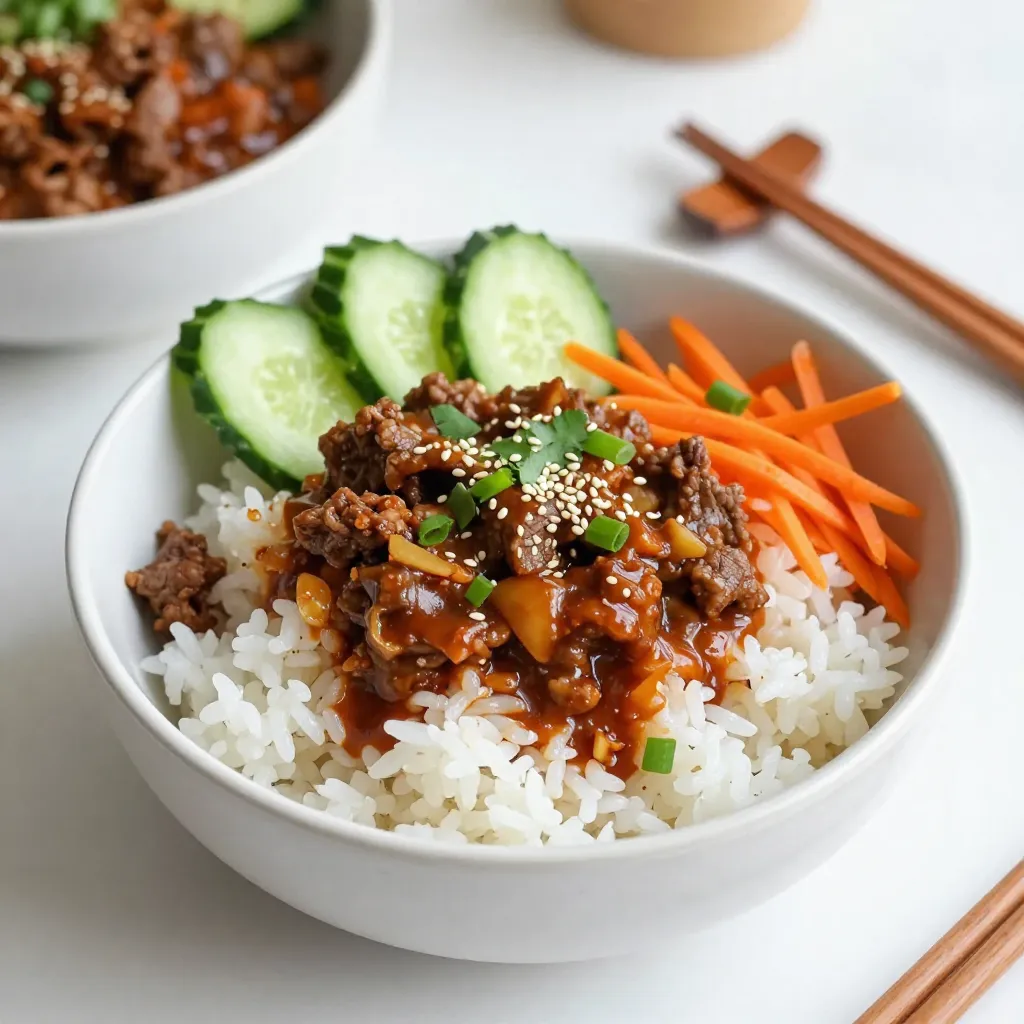
Get ready to spice up your dinner with my recipe for Spicy Korean Beef Bowls! This simple meal packs a flavorful punch while being easy to make. You’ll find a list of key ingredients, easy instructions, and tips to perfect your dish. Whether you prefer it spicy or mild, you’ll learn how to customize it to your taste. Let’s dive in and create a bowl of deliciousness together!
Why I Love This Recipe
- Bold Flavors: The combination of Gochujang and soy sauce creates a rich and spicy flavor profile that is truly irresistible.
- Quick and Easy: With just 20 minutes of total time, this recipe is perfect for busy weeknights when you want something delicious without the long wait.
- Nutritious Ingredients: Packed with protein from the ground beef and vitamins from the carrots and green onions, this dish is as healthy as it is tasty.
- Customizable: You can easily add or substitute vegetables to suit your taste, making it a versatile dish for everyone.
Ingredients
Main Ingredients for Spicy Korean Beef Bowls
– 1 pound ground beef
– 1 tablespoon sesame oil
– 3 cloves garlic, minced
– 1 inch ginger, grated
– 3 tablespoons soy sauce
– 1 tablespoon Gochujang (Korean red chili paste)
– 1 tablespoon brown sugar
– 2 green onions, chopped
– 1 cup shredded carrots
– 1 cup cooked jasmine rice (or brown rice)
– 1 tablespoon sesame seeds
These ingredients create a rich and savory flavor in the dish. The ground beef gives it a hearty base. Garlic and ginger add aroma and warmth. Gochujang brings the heat and depth, while brown sugar balances the spice.
Optional Garnishes
– Fresh cilantro for garnish
– Sliced cucumber for topping
Garnishes make your meal look nice and fresh. Cilantro adds a burst of flavor and color. Sliced cucumber gives a cool crunch that contrasts with the warm beef.
Cooking Essentials
– Large skillet
– Spatula
– Small bowl
A large skillet helps cook the beef evenly. A spatula is perfect for breaking up the meat. A small bowl is needed to mix the sauce well. These tools make cooking easier and more fun!
Step-by-Step Instructions
Preparation of Ingredients
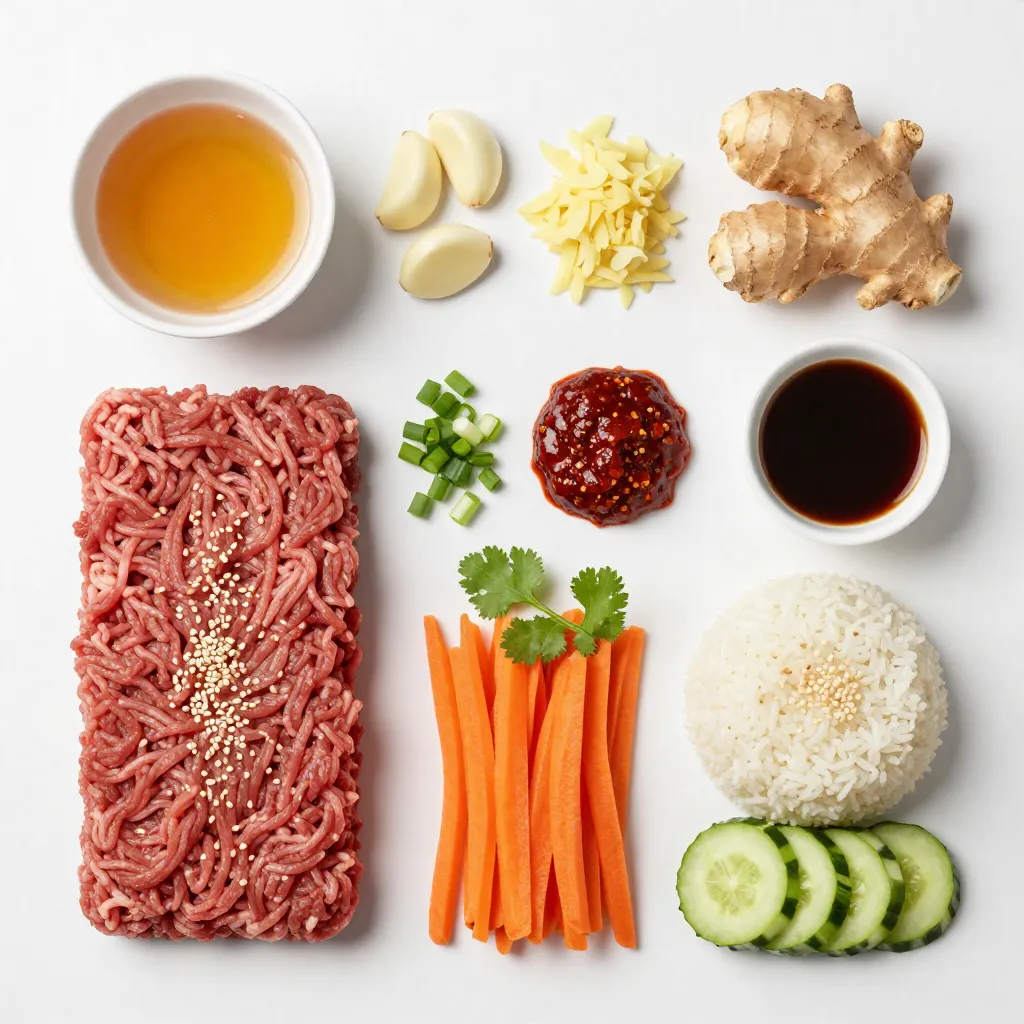
First, gather all your ingredients. You need:
– 1 pound ground beef
– 1 tablespoon sesame oil
– 3 cloves garlic, minced
– 1 inch ginger, grated
– 3 tablespoons soy sauce
– 1 tablespoon Gochujang (Korean red chili paste)
– 1 tablespoon brown sugar
– 2 green onions, chopped
– 1 cup shredded carrots
– 1 cup cooked jasmine rice (or brown rice)
– 1 tablespoon sesame seeds
– Fresh cilantro for garnish
– Sliced cucumber for topping
Make sure your kitchen is clean and organized. This helps the cooking process go smoothly. Mince the garlic and grate the ginger. Chop the green onions. Set everything aside for quick access.
Cooking the Beef Mixture
Heat the sesame oil in a large skillet over medium heat. Add minced garlic and grated ginger. Sauté for about one minute until they smell great. Next, add the ground beef. Use a spatula to break it apart as it cooks. Cook it for about 5-7 minutes until it is browned and no longer pink.
In a small bowl, mix the soy sauce, Gochujang, and brown sugar. Pour this sauce over the cooked beef. Stir well to ensure every piece is coated. Let it cook for another 2-3 minutes. This allows the flavors to blend and thicken.
Add the shredded carrots and chopped green onions to the beef. Cook for one more minute. This will soften the carrots just a bit while keeping their crunch.
Assembling the Bowl
Start with a generous scoop of your cooked jasmine rice in a bowl. This rice is the perfect base. Top it with the spicy beef mixture you just made.
Now, sprinkle sesame seeds over the top. They add a nice crunch. Finish with fresh cilantro and sliced cucumber for garnish. The cucumber adds a refreshing bite to balance the spice.
Enjoy your Spicy Korean Beef Bowl! It’s a simple meal packed with flavor.
Tips & Tricks
How to Achieve the Perfect Spiciness
To make your Spicy Korean Beef Bowls just right, balance is key. Gochujang gives a deep heat. Start with one tablespoon of Gochujang. Taste it, then add more if you like. If you’re unsure, add a bit of sugar to cool the heat. For an extra kick, add red pepper flakes or sliced fresh chilies. This way, you control how spicy your dish is.
Enhancing Flavor Profiles
Flavor is what makes this dish shine. The sesame oil adds a nutty taste. Garlic and ginger bring warmth and depth. Mix soy sauce with Gochujang and brown sugar. This blend creates a sweet and spicy sauce. Toss in fresh green onions and carrots for crunch. Don’t forget to top with sesame seeds and cilantro for that fresh finish. These little details take your meal from good to great.
Time-Saving Preparation Strategies
Prep time can be quick if you plan. Chop your garlic and ginger ahead of time. Store them in the fridge for easy access. You can also buy pre-shredded carrots to save time. Cook your rice in advance, too. This makes meal prep easy on busy days. Remember, a little planning goes a long way to make cooking fun and simple.
Pro Tips
- Choose the Right Beef: Using ground beef with a higher fat content will give you a richer flavor and juicier texture. Aim for 80/20 beef for the best results.
- Adjust the Spice Level: If you prefer a milder dish, reduce the amount of Gochujang, or mix it with some regular chili paste. You can always add more spice later!
- Fresh Garnishes Matter: Adding fresh cilantro and sliced cucumber not only enhances the dish’s presentation but also adds a refreshing contrast to the spicy beef.
- Meal Prep Friendly: This dish can be made ahead and stored in the refrigerator for up to 3 days. Just reheat and serve over fresh rice for an easy meal!
Variations
Vegetarian Alternatives
You can easily make a vegetarian version of spicy Korean beef bowls. Use firm tofu instead of ground beef. Press the tofu to remove excess water. Then, crumble it into small pieces. Sauté it in the sesame oil just like the beef. This gives you a great texture. You can also try tempeh or mushrooms for a hearty bite. Both options soak up the sauce well, making them tasty substitutes.
Rice Substitutions
Jasmine rice is a classic choice for these bowls. However, you can use brown rice for more fiber. Quinoa is another great option if you want a protein boost. Cauliflower rice is perfect for a low-carb alternative. It cooks quickly and adds a nice crunch. Choose the rice that best fits your diet or taste.
Different Vegetables to Add
Feel free to mix in more veggies to your bowls. Bell peppers add sweetness and color. Broccoli or snap peas give a nice crunch and nutrition. Spinach wilts down quickly, adding greens without much fuss. You can even toss in some zucchini or mushrooms for extra flavor. The key is to add what you love and keep it colorful.
Storage Info
Best Practices for Storing Leftovers
To keep your Spicy Korean Beef Bowls fresh, store them in an airtight container. This helps to lock in flavors and moisture. Let the beef cool down first before you close the lid. It’s best to eat leftovers within three days. If you want to keep them longer, consider freezing.
Reheating Instructions
When you’re ready to enjoy your leftovers, reheat them on the stove. Place the beef in a skillet over medium heat. Stir often to warm it evenly. You can add a splash of water or soy sauce to keep it moist. Heat until it’s hot all the way through. This usually takes about 5 minutes. You can also use a microwave. Just cover the bowl and heat in short bursts, stirring in between.
Freezing Guidance
If you want to freeze your Spicy Korean Beef, place it in a freezer-safe container. This keeps it safe and tasty. Make sure to label it with the date. You can freeze it for up to three months. When you’re ready to eat, thaw it in the fridge overnight. After that, reheat it on the stove or in the microwave. This way, you can enjoy a quick meal later!
FAQs
Can I use a different type of meat?
Yes, you can! Ground turkey or chicken works well too. These meats will still soak up the sauce. If you want beef, try flank steak. Just slice it thinly. Remember, cooking time may change. Adjust for the meat you choose.
How to adjust the spice level?
To make it milder, use less Gochujang. Start with one teaspoon. You can also add more brown sugar. This sweetens the dish and balances the heat. For more spice, add extra Gochujang or red pepper flakes. Taste as you go. It’s all about your preference.
What sides pair well with Spicy Korean Beef Bowls?
Many sides work great! Try kimchi for a tangy bite. Pickled veggies add crunch and flavor too. A fresh salad with cucumbers and carrots is nice. You can also serve steamed broccoli or green beans. These sides bring color and balance to your meal.
In this blog post, we explored the key ingredients and steps to make Spicy Korean Beef Bowls. We discussed how to prepare the beef, assemble the bowl, and add tasty garnishes. I shared tips for finding the right spice level and gave ideas for variations, like vegetarian options. Proper storage and reheating methods were also covered to keep your meals fresh.
Now, it’s time for you to enjoy making this delicious dish your way. Happy cookin